Independent due diligence for family offices

Before you commit, someone should argue the other side.

Family offices and private investors hire us one deal at a time to look hard at early stage technology before the money moves.

Series A · Investor deckSlide 7
Why now: the US opportunity
  1. $4.2bn US market, growing 30% a year
  2. 3 Fortune 500 pilots signed
  3. Tier one US investor leading the round
  4. 18 months to cash flow positive
Confidential · For discussion
Slide 7Report
Why now: the US opportunity
  1. $4.2bn US market, growing 30% a yearTop down. Who buys in year one, and at what price?
  2. 3 Fortune 500 pilots signedUnpaid, and none has a date to convert.
  3. Tier one US investor leading the roundTerm sheet unsigned. Read the preference stack.
  4. 18 months to cash flow positiveAssumes a US sales cycle nobody has timed.
What we would ask before you commit
Drag the line to see what we would ask. Illustrative, not a real company.
Scroll
Where we have sat

SunStone™ · How we score a company

65 dimensions. Six lenses. No middle ground.

Norse sagas tell of a sunstone that found the sun through cloud. Ours does the same for a deal. Every company is scored on 65 dimensions across six lenses, by each of us independently, before we compare notes.

4 to 6: not allowed Your scores

ProductDimension 1 of 11

1 to 3: has to improve7 to 10: acceptable to great

Tap a number to score the deal on your desk. 10 means you are sure.

    Scored, then argued.Each of us scores alone. Where our numbers differ is where the real work starts.
    No 4, 5 or 6.A middle score hides an opinion. You either believe it or you have to say why not.
    Numbers frame the judgement.The score starts the conversation. The written view ends it.
    Before you investShould you?

    A score on 65 dimensions and a written view, including the case against.

    After you investWhat to fix first?

    The same scoring on a company you already own shows where it needs help.

    SunStone at sea

    Every deal has rocks under the surface.

    From a distance the route looks clear. Hold the sunstone over the chart and find the seven rocks a pitch deck leaves out.

    0of 7 rocks found

    Move your cursor over the chart.

    Illustrative chart, not a real company.

    What decides most deals

    From contacts to contracts.

    Engineers build great products. Fewer can sell them. We test how the company turns contacts into paying contracts, because that is where most early stage plans break.

    Who sells, how long it takes, and what actually converts. The deck shows the pipeline. We look at what happens inside it.

    1. Contacts
      Who is really in the pipeline?
    2. Meetings
      Who comes back for a second one, and why?
    3. Pilots
      Are they paid, with a date to convert?
    4. Contracts
      Who closes, and how long does it take?

    Illustrative.

    What you get

    Three things, and nothing else.

    01

    No stake in the deal

    Most people who bring you a deal are paid when it closes. That does not make them wrong. It does mean one voice is missing from the room. We manage no capital, take no fundraising mandates and are never paid by the company we examine.

    • Not a fund
    • No fundraising mandates
    • Never paid by the company
    The company You Introducer BiFROST Success feeon close “A strongopportunity” No fee.No mandate. Your fee,agreed up front Written view andthe case against

    The person recommending the deal is paid when it closes.

    02

    The case against, in writing

    Two to four weeks on one opportunity. Commercial and technical review, management, capital structure and terms, and a deliberate argument against. We talk to customers and former employees, not only to the founder.

    • One deal at a time
    • 2 to 4 weeks
    • A view you can act on
    1. Day 1The questionWhat you are looking at, what you believe, when you have to decide.
    2. Week 1Commercial and technical reviewDoes the product do what the deck says, and who actually pays for it.
    3. Week 2PeopleManagement, customers and former employees. Not only the founder.
    4. Week 3Terms and the case againstCapital structure, preferences, and the strongest argument for walking away.
    5. The answerA written viewWhat we would do with our own money, and what would change our mind.
    03

    Both sides of the Atlantic

    A former Chief Investment Officer of a Norwegian fund house and an operator who has run US subsidiaries of Norwegian companies. We read Nordic companies coming to America, and American capital looking north, from the inside.

    • Oslo
    • Bozeman, MT
    • Phoenix, AZ
    Oslo Bozeman, MT · Phoenix, AZ
    Tap either end of the bridge.

    Who you would work with

    Two partners, and no layer in between.

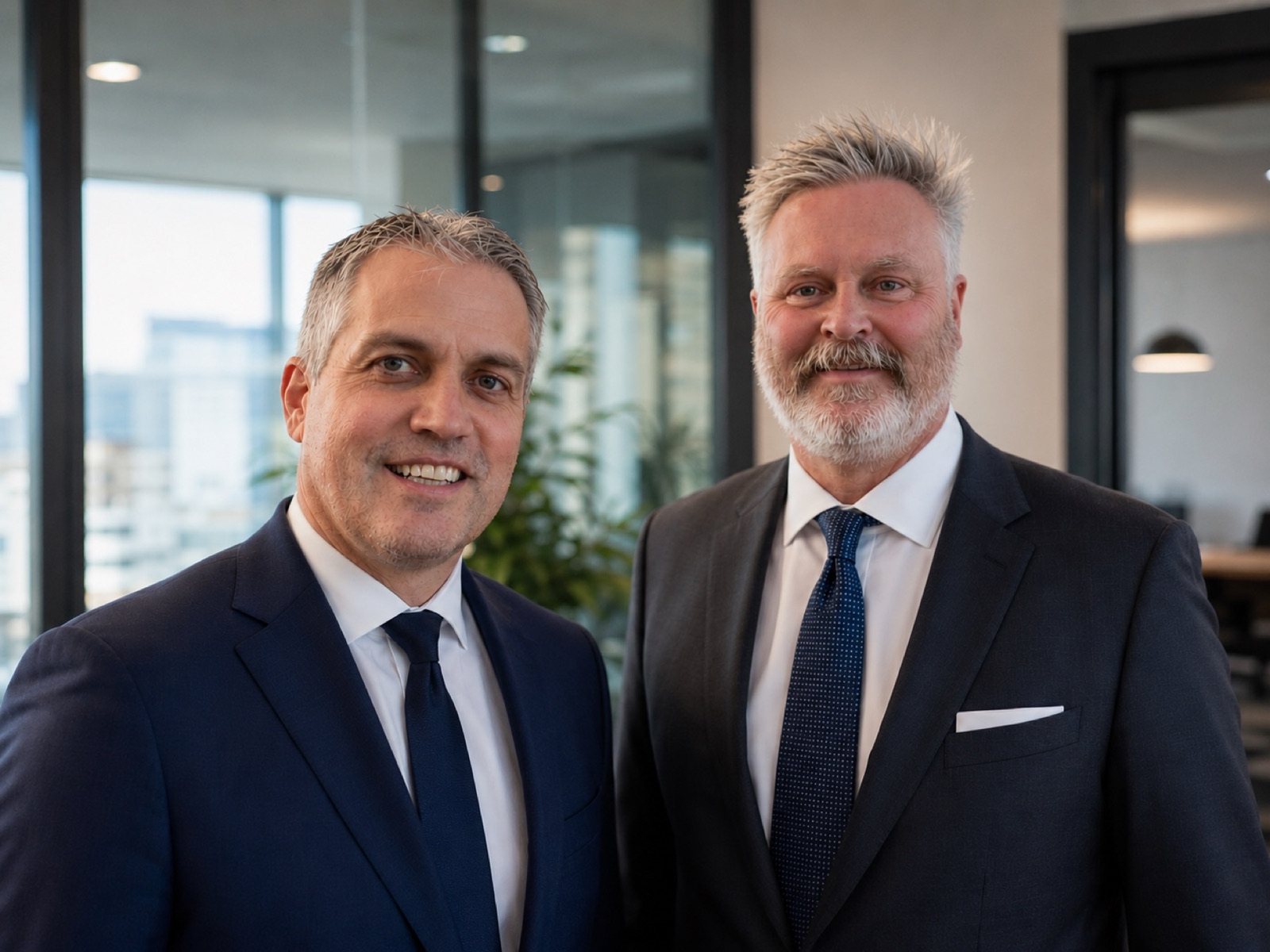
    Bjørn Forsdal and Jarl Ulvin
    Bjørn Forsdal, left, and Jarl Ulvin
    Jarl Ulvin
    CEO and Founder
    Former Chief Investment Officer at ODIN Fund Management, and Country Head of corporate finance for SEB in Norway.
    jarl@bifrost.capital
    Bjørn Forsdal
    President and Co-Founder
    Fifteen years advising family offices on direct investments, and President and COO of US subsidiaries of Norwegian companies.
    bjorn@bifrost.capital

    Questions we get

    Asked before every engagement.

    What do you do that AI cannot?

    We use AI every day, which is how we know where it goes wrong. Experience decides which questions to ask and catches what the model gets wrong. Every report is reviewed by both of us before you see it.

    What if we cannot get access to the founders?

    We can still do the work, but it is a different deliverable. Team and sales are hard to judge from documents alone, so we tell you up front what we can and cannot conclude.

    Who is this for?

    Mainly smaller family offices and private investors who invest alongside others and do not have a full diligence team in house.

    What does it cost?

    A fixed fee, scoped with you and agreed before we start. It is built from modules: a full or a focused review, forecast and budget validation, meeting the team in person, and SunStone™ reviews of companies you already own.

    Can you help after we invest?

    Yes. The same SunStone™ scoring shows what to fix first in a company you already own, and we can stay on to help put it right.

    Contact

    Send us the one you are unsure about.

    A first conversation costs nothing and usually takes twenty minutes. Tell us what you are looking at and when you have to decide.

    Book a meeting

    Or write to jarl@bifrost.capital or bjorn@bifrost.capital. Ask for an NDA first if you want one.